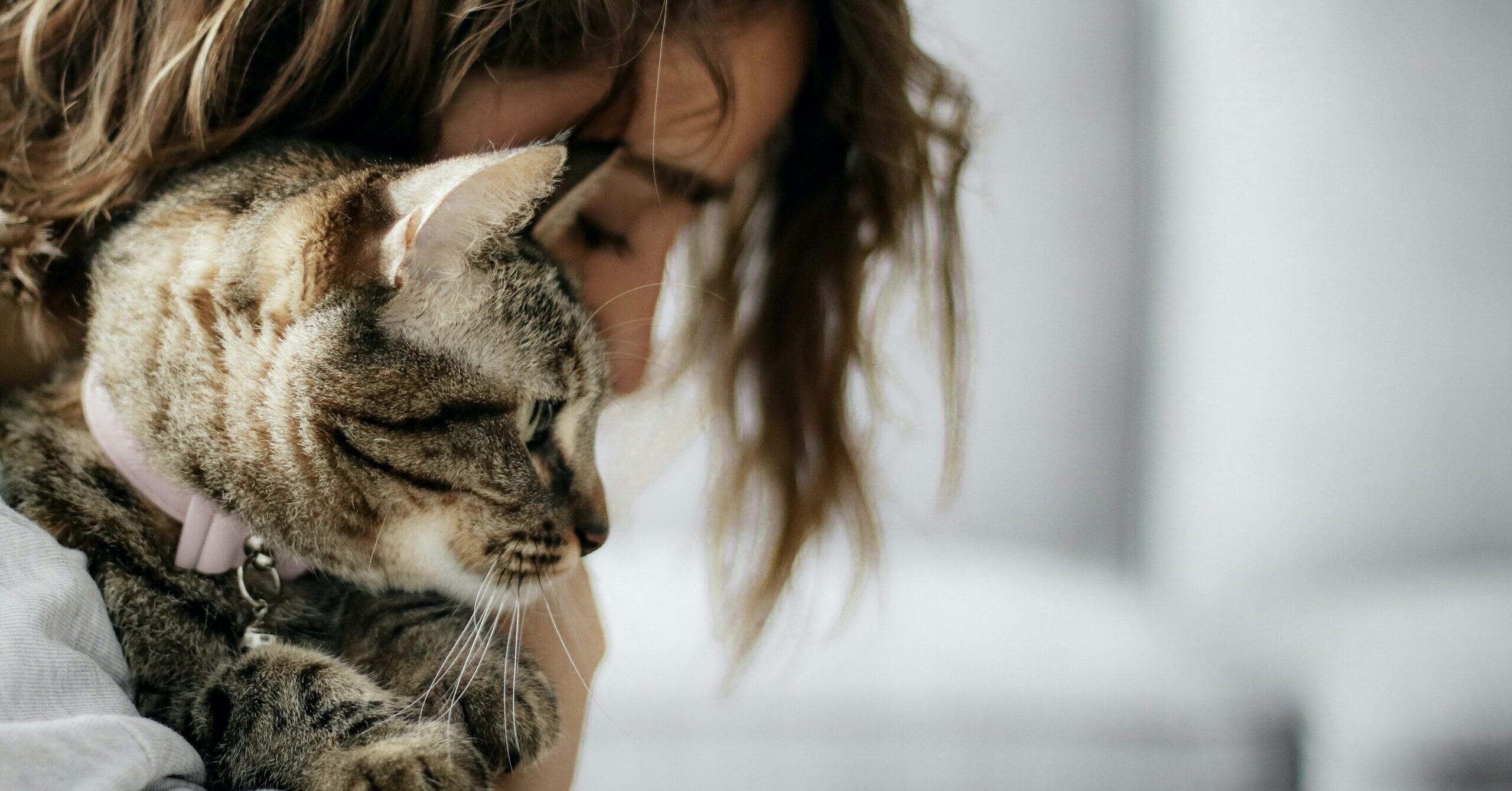
Cats are mysterious and independent animals, but most cat owners believe that their cats are sensitive to their feelings. If you’re feeling sad, anxious, or happy, your cat may respond to your emotions in different ways.
But do they really? Can cats sense human emotions? Scientists and animal experts have been studying this topic, and their research reveals that cats are more emotionally intelligent than most people think.
Cats don’t display emotions like dogs, but they can pick up on human moods in their own way.
How Do Cats Detect Sadness?
Cats are very perceptive animals. They use their senses to detect even the smallest change in their environment. When it comes to human emotions, cats rely on body language, facial expressions, and tone of voice to gauge their owner’s emotions.
If you’re crying, your cat may notice the tears and associate them with distress. Changes in routine, such as sleeping more or speaking less, can also convey sadness to your cat.
Some other cats even use their sense of smell to detect stress hormones that are released by humans.

What Signs That Your Cat Knows If You’re Sad?
If your cat can sense that you are sad, it may do some things to try and comfort you. Some of the ways your cat knows you are sad are staying close to you, rubbing against you, purring more than usual, or sitting on your lap.
Some will gently touch you with their paws or gaze at you with gentle eyes. If your cat is following you around the house everywhere or meowing more than usual when you are upset, it could be a sign of concern.
These actions show that your cat knows how you feel and is attempting to console you in its own manner.
How Do Cats React to Human Sadness?
Cats also react to human grief differently depending on their personality. Some cats will become more affectionate and will seek to have physical contact, while others will provide you with space but will stay close.
If your cat is usually independent but all of a sudden becomes clingy when you are upset, it could be responding to your emotions.
On the other hand, some other cats become anxious if they sense anxiety in their owners. They will hide, become agitated, or meow a lot.
How a cat will react depends on its personal temperament and on its relationship with the owner.

What Is The Science Behind Cats and Human Emotions?
Scientific studies have discovered that cats do possess the ability to recognize human emotions to some extent.
Cats can distinguish between sad and happy faces, according to research. They may not respond as vigorously as dogs, but they do show a change in behavior.
Some studies also note that cats react to the tone of the voice of their owner. If you speak in a sad tone, your cat can become more relaxed or even affectionate.
This ability to detect emotions is likely the result of domestication, as cats have been staying with humans for thousands of years.
Does Breed or Personality Affect Empathy Of Your Cat?
Not all cats react the same way to human emotions. Some breeds, such as Ragdolls and Maine Coons, are renowned for their affectionate and people-oriented personalities, so they are more apt to react to their owner’s emotions.
Personality, though, trumps breed. Some cats are simply more empathetic, and some are more aloof.
If a cat is extremely bonded to its owner, it is more apt to sense their emotions and react accordingly.
Cats raised in a loving and social household are also more apt to be sensitive to human emotions.

Can Cats Help with Your Mental Health?
Cats are a comfort to many people who are experiencing difficult situations. Cats make great companions, they assist in stress relief, and they offer emotional support.
It has been proven that petting a cat can lower blood pressure and anxiety. A cat’s purr is rhythmic and calming, and the sound can be therapeutic to a person who is stressed or depressed.
There are even cat therapy programs that use cats to help people with mental illness. Although cats do not fully understand human emotions, their presence and affection can be a comforting and healing source.
Do Cats Really Care About Owner’s Emotion?
It is a common myth that cats are aloof and cold to their owners. However, research and owner reports suggest otherwise.
Cats may not show their affection like dogs, but that does not automatically mean that they do not care. There are some who think that cats only come to their owners for selfish reasons, but research suggests that cats do form attachments to owners.
They recognize their owner’s voice, are happy to be near them, and can even miss their owners when they are away. Cats, while independent, are emotionally capable of attachments.
Also Read This:
(How to Rehome a Cat: A Complete Guide)
Conclusion
Cats do not always display emotions in a comprehensible manner, yet they can sense human emotions and react to them.
They use body language, facial expressions, tone of voice, and even scent to detect a mood shift in their owner. While their reactions are personality- and breed-dependent, most cats offer comfort and affection when their owners are distressed.
The bond between a cat and owner plays a very large role in how a cat will react to human emotions. By purring, staying close, or simply being present, cats can provide emotional support and companionship to their owners.